
How to Secure Your Tiny House on Wheels for Storm Winds
Most people don’t think about anchoring their tiny house until the wind picks up.
By then, you feel it.
A slight shift.
A creak.
Just enough to make you question whether everything’s actually holding.
And once you notice it… you can’t unnotice it.
I’ve been through enough storms in a tiny house to know this:
You don’t want to be figuring this out when the weather turns.
You want it sorted before.
The good news is it’s simple.
It’s not expensive.
And it’s something you can do in an afternoon.
Here’s exactly how we do it.
A traditional house is fixed.
Piles. Concrete. Bolted down.
A tiny house on wheels isn’t.
It sits on a trailer chassis. It’s designed to move.
Which means without anchoring, it can shift.
Even in moderate wind, you’ll feel it.
And in a proper storm, it’s not just uncomfortable. It’s a risk.
Anchoring changes that.
It ties your tiny house to the ground so it behaves more like a fixed structure when the wind hits.
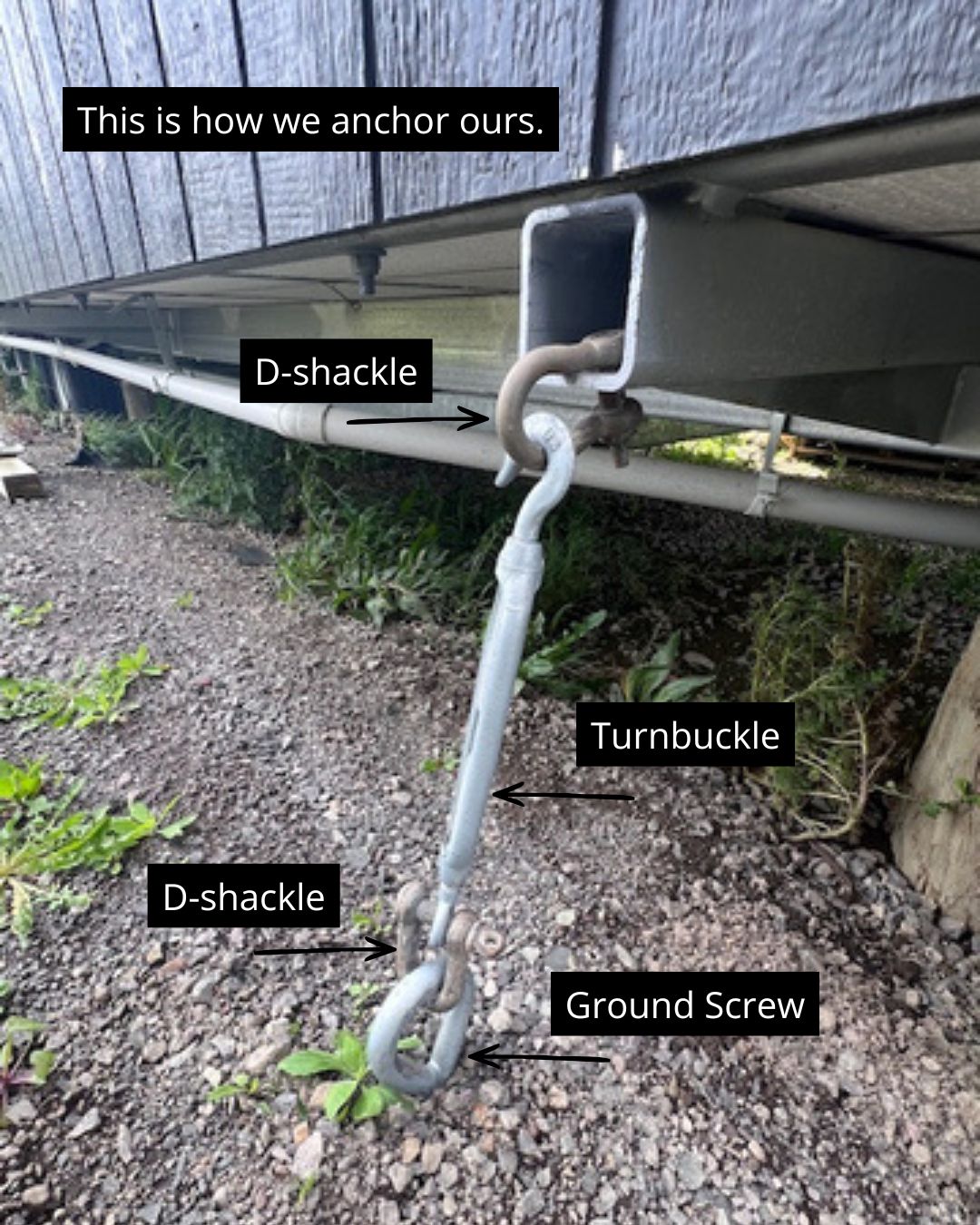
This isn’t complicated. It’s standard hardware.
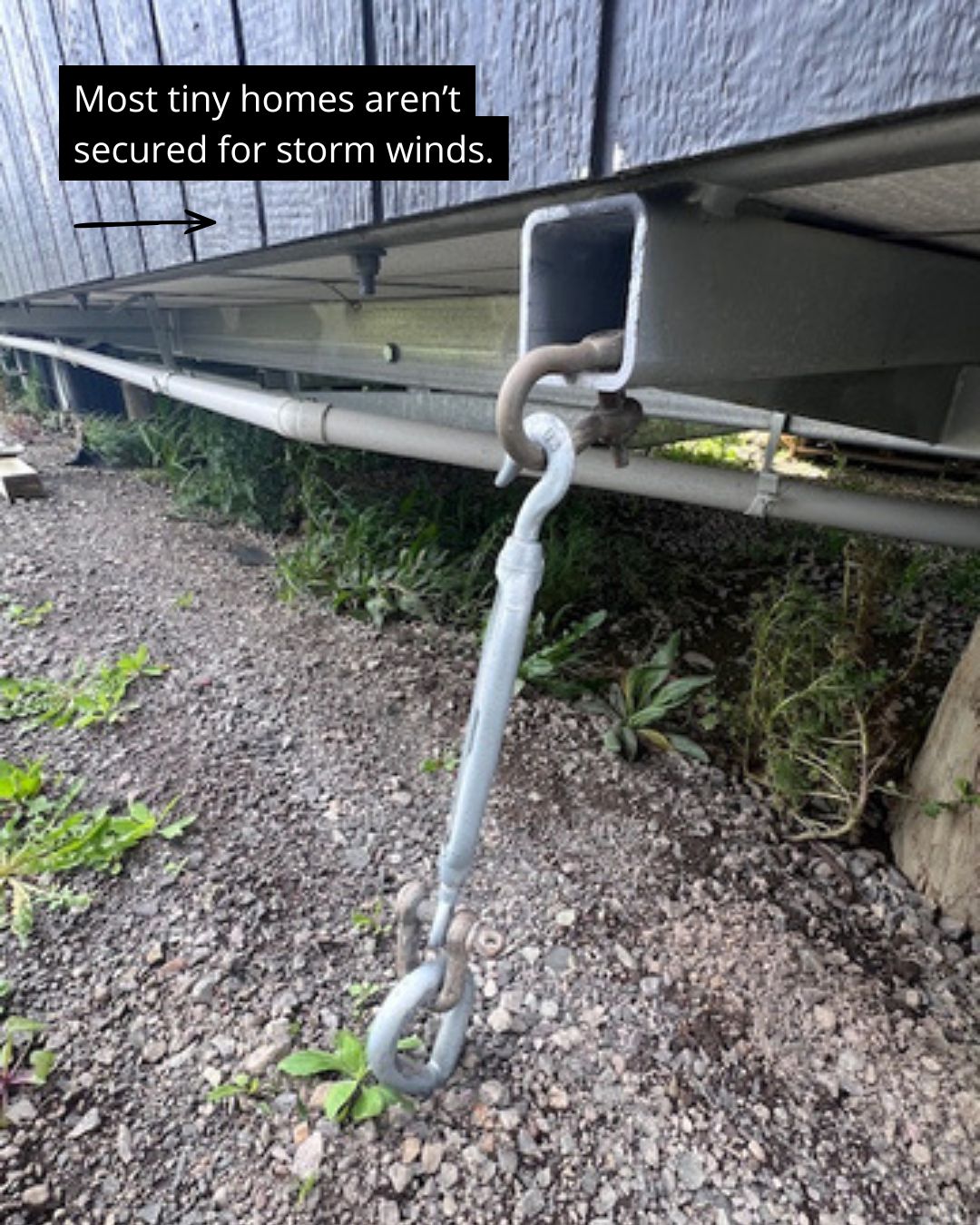
Ground screw into the soil.
D-shackle to connect.
Turnbuckle back to the trailer chassis.
Tighten until there’s no slack.
Just enough to make you question whether everything’s actually holding.
And once you notice it… you can’t unnotice it.
I’ve been through enough storms in a tiny house to know this:
You don’t want to be figuring this out when the weather turns.
You want it sorted before.
The good news is it’s simple.
It’s not expensive.
And it’s something you can do in an afternoon.
Here’s exactly how we do it.
Why Tiny Houses on Wheels Need Anchoring
A traditional house is fixed.
Piles. Concrete. Bolted down.
A tiny house on wheels isn’t.
It sits on a trailer chassis. It’s designed to move.
Which means without anchoring, it can shift.
Even in moderate wind, you’ll feel it.
And in a proper storm, it’s not just uncomfortable. It’s a risk.
Anchoring changes that.
It ties your tiny house to the ground so it behaves more like a fixed structure when the wind hits.
What You Need
This isn’t complicated. It’s standard hardware.
- Ground screws (earth anchors)
- D-shackles
- Turnbuckles
That’s it.
Ground screw into the soil.
D-shackle to connect.
Turnbuckle back to the trailer chassis.
Tighten until there’s no slack.
How to Set It Up
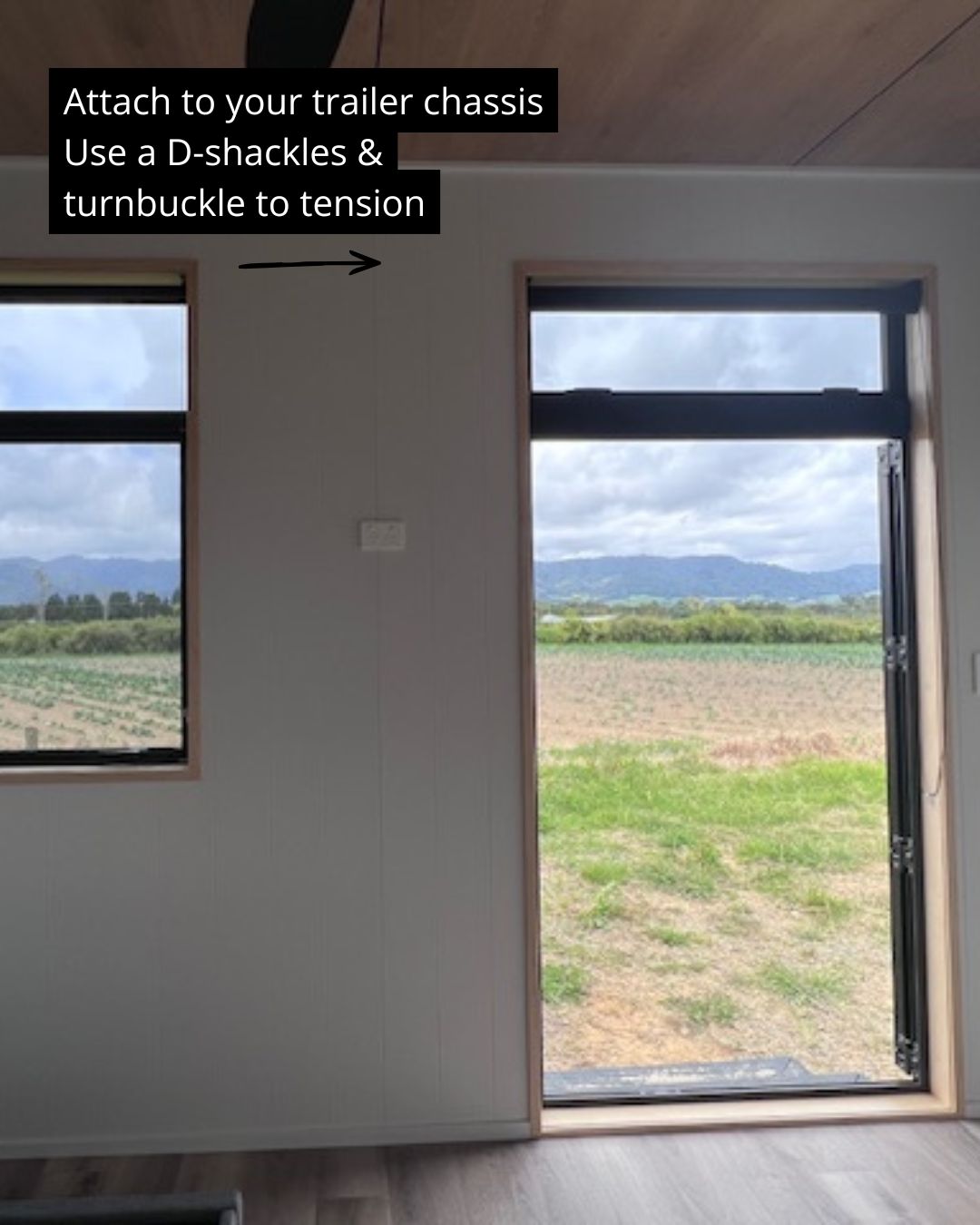
- Screw the ground anchors into the soil at each corner of your tiny house
- Attach a D-shackle to each anchor
- Connect a turnbuckle
- Attach back to the trailer chassis
- Tighten until firm - no slack, no movement
- Repeat on all corners (minimum four points)
You’re not trying to over-engineer it. (or using screw piles that may deem your house a building with council)
You’re removing movement.
When Four Anchors Isn’t Enough
Four corners is the minimum.
Add more if:
- You’re on exposed land
- You’re coastal
- You’re in a high-wind zone
- Your tiny house is longer than 8 metres
- You’re on a ridge or hilltop
For longer builds, add anchor points along the chassis every 3-4 metres.
This is where people underestimate it.
More exposure = more restraint needed.
What It Costs
A few hundred dollars.
That’s it.
Ground screws, D-shackles and turnbuckles are all standard rural or marine hardware. You’ll find them at places like PGG Wrightson.
It’s not specialist.
It’s just often overlooked.
The Part That Matters Most
Do this before the wind hits.
Not when you’re already hearing it.
Not when the weather warning comes through.
Not when you’re lying in bed at 2am wondering if everything’s holding.
Do it on a calm day.
Take an afternoon.
Tighten everything down properly.
And then you don’t have to think about it again.
That’s the difference.
A Note on Soil Types
Ground screws work well in most NZ soils.
Clay. Loam. Compacted ground.
If you’re on sand or very soft ground, you may need longer anchors or a different system.
If you’re unsure, talk to your local farm supply store. This is everyday stuff for them.
Still Not Sure?
Every site is different.
Wind exposure. Soil type. Length of your tiny. Natural shelter.
If you’re unsure what setup is right for your site, that’s exactly what we work through inside the Tiny Living Success Circle.
Real setups. Real answers. No guesswork.
https://www.tinyhousemastery.com/work-with-me
Stay connected with news and updates!
Join our mailing list to receive the latest news and updates from our team.
Don't worry, your information will not be shared.
We hate SPAM. We will never sell your information, for any reason.